

How to Verify Inspector Accreditation Properly
A current inspection report is only as reliable as the person authorised to make its findings. Before engaging an inspector for a boiler, pressure vessel or associated pressure equipment, asset owners should verify inspector accreditation against the work required, the governing standard and the inspector’s actual scope of competence. A business card, previous site experience or a generic engineering qualification is not sufficient evidence for in-service pressure equipment inspection.
For Australian plant operators, this verification is a practical control. It supports safe operation, defensible compliance records, insurer confidence and sound maintenance decisions. It also reduces the risk of discovering, after an incident or audit, that the person who assessed critical equipment was not appropriately qualified for the task.
Why inspector accreditation matters for pressure equipment
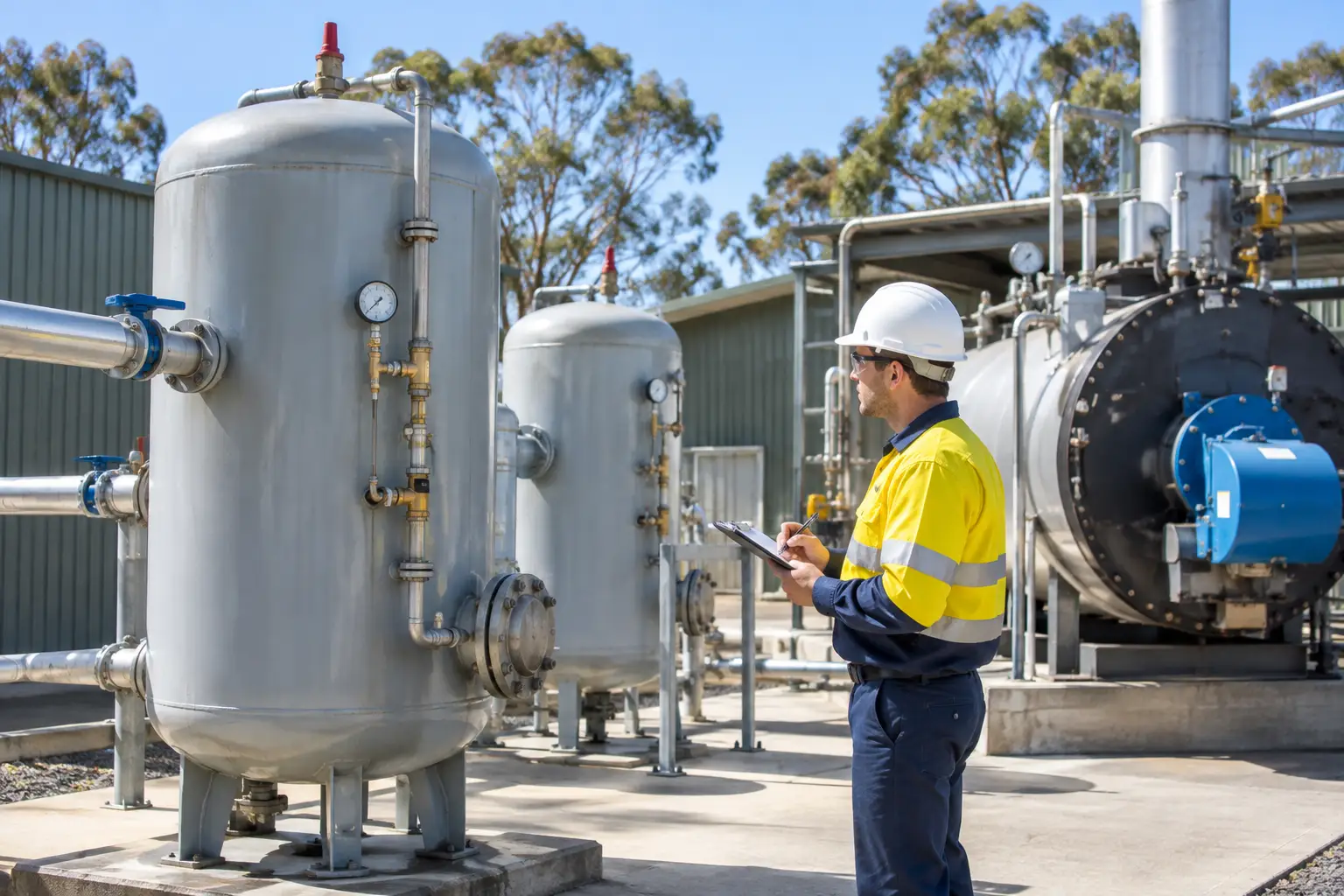
Boilers and pressure vessels are safety-critical assets. Their condition cannot be assessed adequately through a superficial visual check or by relying solely on maintenance history. An in-service inspection may require the inspector to evaluate corrosion, erosion, fatigue, cracking, pressure-retaining boundaries, safety valves, protective devices, operating history, repairs, inspection intervals and the implications of any detected deterioration.
AS 3788, the Australian Standard for the in-service inspection of pressure equipment, sets out requirements for managing and inspecting this equipment throughout its operating life. It places particular emphasis on competent persons and appropriate inspection planning. The standard does not treat inspection as a paperwork exercise. It requires technical judgement applied to the equipment’s design, service conditions, condition and remaining fitness for service.
The consequences of using an unsuitable inspector can extend beyond an incomplete report. Deficiencies may be overlooked, incorrect intervals may be assigned, repairs may proceed without suitable review, or a certificate may not withstand regulatory, insurer or incident scrutiny. Production continuity is also at stake. A planned inspection that identifies deterioration early is generally more manageable than an unplanned shutdown following a leak, failure or regulatory intervention.
How to verify inspector accreditation before engagement
Verification should occur before the inspection is scheduled, particularly where the work involves certification, an overdue inspection, significant deterioration, a repair, altered service conditions or equipment with a complex operating history. Ask the inspection provider to state clearly who will undertake the work and what credentials apply to that individual, rather than accepting broad statements about the company.
For in-service pressure equipment, confirm that the inspector meets the prescribed competency requirements under AS 3788. In Australia, AICIP accreditation is a recognised indicator that an inspector has been assessed against defined competency requirements for pressure equipment inspection. The relevant accreditation category must align with the equipment and inspection activity being commissioned.
Do not assume that one credential applies to all pressure equipment. Boilers, pressure vessels, piping systems and associated safety devices can involve different technical considerations. An inspector’s authority and competence should match the specific asset class, the service duty and the nature of the examination.
It is reasonable to request evidence of current accreditation, including the accreditation category, status and expiry date where applicable. Accreditation should be verified through the relevant issuing body or register, not merely by viewing an old certificate or accepting an unsupported claim. If the provider uses subcontractors, ask whether the nominated inspector, rather than only the principal business, holds the required accreditation.
Check the scope, not just the credential
AICIP accreditation is an important part of the assessment, but it should not be the only check. The work may call for additional capability depending on the equipment’s origin, repair history or intended use.
For example, imported equipment, code-stamped vessels, repairs to pressure-retaining parts and manufacturing-related questions may require familiarity with ASME codes, National Board requirements or other applicable international frameworks. These credentials do not replace AS 3788 competency for Australian in-service inspection. They can, however, provide valuable technical depth where equipment documentation, repair methods or design-code requirements must be interpreted.
Ask the provider to explain how the inspector’s experience relates to your plant. Relevant experience includes the pressure medium, process conditions, operating temperatures, cyclic duty, corrosion mechanisms and age of the equipment. A vessel used in a food-processing operation may present different inspection concerns from a steam boiler, ammonia receiver or high-temperature process vessel.
The answer should be specific. A technically credible provider can explain the likely inspection approach, the records needed before attendance and the limits of an assessment without making premature assumptions about the equipment’s condition.
Confirm independence and decision-making authority
Competence is not only a matter of technical knowledge. The inspection outcome must be objective. Where an inspector is tied to a manufacturer, repairer or asset transaction, the asset owner should understand how potential conflicts will be managed.
An independent inspector is positioned to advise on equipment condition, inspection intervals and corrective actions without a commercial interest in selling repairs, replacement equipment or other remedial work. This does not mean every repairer-provided inspection is invalid. It means the asset owner should distinguish between useful maintenance advice and an independent assessment of safety, compliance and fitness for continued service.
Ask who reviews findings, who has authority to issue certification or recommendations, and whether the inspection business has a documented quality system. A quality management system certified to ISO 9001:2015 provides evidence that processes for competence, document control, corrective action and record management are subject to a structured framework. It is not a substitute for inspector accreditation, but it is a meaningful assurance that technical work is controlled consistently.
Records that should support accreditation verification
Retain a simple verification record in the plant compliance file. This helps demonstrate due diligence and avoids repeating the same checks each time a new inspection is due. The record should identify the inspector, their relevant accreditation and expiry status, the verification date, the intended inspection scope and the equipment covered.
Keep copies of the final report, certificate or inspection statement alongside this information. The report should identify the inspector responsible for the assessment, describe the equipment sufficiently to avoid ambiguity and state the findings, recommendations and next inspection requirements in clear terms.
A defensible record set may also include equipment registration details, design and fabrication documents where available, previous inspection reports, repair records, thickness-monitoring results, safety-valve test records and operating history. These documents give the inspector the context needed to make an informed assessment. They also allow changes in condition to be tracked over time.
Where records are incomplete, disclose this at the outset. Older plant commonly has gaps in its documentation, particularly after ownership changes, site relocations or long operating histories. Missing records do not automatically make an inspection impossible, but they may affect the inspection method, the evidence required and the level of confidence available for certification.
Questions to ask an inspection provider
Before appointing an inspector, seek direct answers to several practical questions. What AICIP accreditation does the nominated inspector hold, and is it current? How does that accreditation apply to this boiler, pressure vessel or pressure system? Does the inspector meet the relevant AS 3788 requirements for the proposed in-service inspection? Who will review and authorise the report? How are independence and conflicts of interest managed?
For complex equipment, also ask about experience with the applicable design and repair codes. If the vessel carries ASME markings, has undergone pressure-retaining repairs or was manufactured overseas, capability in ASME and National Board contexts may be relevant. The appropriate level of verification depends on the equipment risk, its service history and the decisions the inspection is expected to support.
A capable provider will answer these questions directly and provide verifiable evidence. Vague assurances such as “fully qualified”, “industry approved” or “highly experienced” should be treated as a starting point for further enquiry, not as proof of competence.
Accreditation is one part of a sound inspection decision
Accreditation confirms a baseline of assessed competence. It does not remove the need for a properly defined scope, adequate plant information, safe access, suitable inspection methods and clear reporting. Nor does it guarantee that every asset can be certified without further examination or corrective work.
For asset owners, the practical objective is straightforward: appoint an inspector whose credentials are current, relevant and independently verifiable, then give that person the information and access needed to assess the equipment properly. Pressure Vessel Inspections Pty Ltd applies this approach through AICIP-accredited in-service inspectors, AS 3788-based inspection practice and independent engineering advice.
A few minutes spent checking accreditation before work begins can protect years of operating history, support informed maintenance planning and ensure that critical pressure equipment is assessed with the authority the task requires.


Comments