

AS 3788 Compliance Guide for Pressure Equipment
- PVI
- Aug 11
- 6 min read
A pressure vessel can remain in production for years without attracting attention, then become the focus of a shutdown, regulator enquiry or insurance review when its inspection history cannot be demonstrated. This AS 3788 compliance guide is intended for asset owners and duty holders who need a practical, defensible approach to the in-service inspection of boilers, pressure vessels and associated pressure equipment.
AS 3788 provides the framework for determining whether pressure equipment remains safe and fit for continued operation. Compliance is not achieved by filing a past certificate or arranging an inspection only when a problem is apparent. It depends on an active system of equipment identification, risk-based inspection planning, competent assessment, documented findings and timely corrective action.
What AS 3788 compliance requires in practice
AS 3788 applies to the in-service inspection of pressure equipment after installation. Its purpose is to manage deterioration that can occur during operation, including corrosion, erosion, fatigue, cracking, overheating, mechanical damage and degradation of safety-critical components.
For an asset owner, the standard should be treated as an operating discipline rather than a one-off inspection event. The starting point is a complete and accurate register of pressure equipment. Each item should be identifiable and supported by the information needed to assess it properly: design and registration details where applicable, service conditions, fabrication records, previous inspection reports, repairs, alterations and maintenance history.
The inspection approach must reflect the equipment and its duty. A low-consequence air receiver in benign service does not present the same inspection considerations as a steam boiler, an ammonia receiver, a process vessel exposed to corrosive product, or a vessel subject to frequent pressure and temperature cycling. Inspection intervals, methods and scope must therefore be determined from equipment condition, operating history, hazard level and the mechanisms likely to cause deterioration.
This is where a generic calendar-based approach can fall short. Time-based intervals remain useful, particularly for establishing a baseline, but condition-based planning may be appropriate where reliable operating and inspection data is available. The decision must be technically justified and recorded.
Establish the equipment register and inspection basis
A compliant inspection programme begins with knowing precisely what is on site. Incomplete registers are common, particularly where equipment has changed ownership, production areas have been altered, or older vessels have limited documentation.
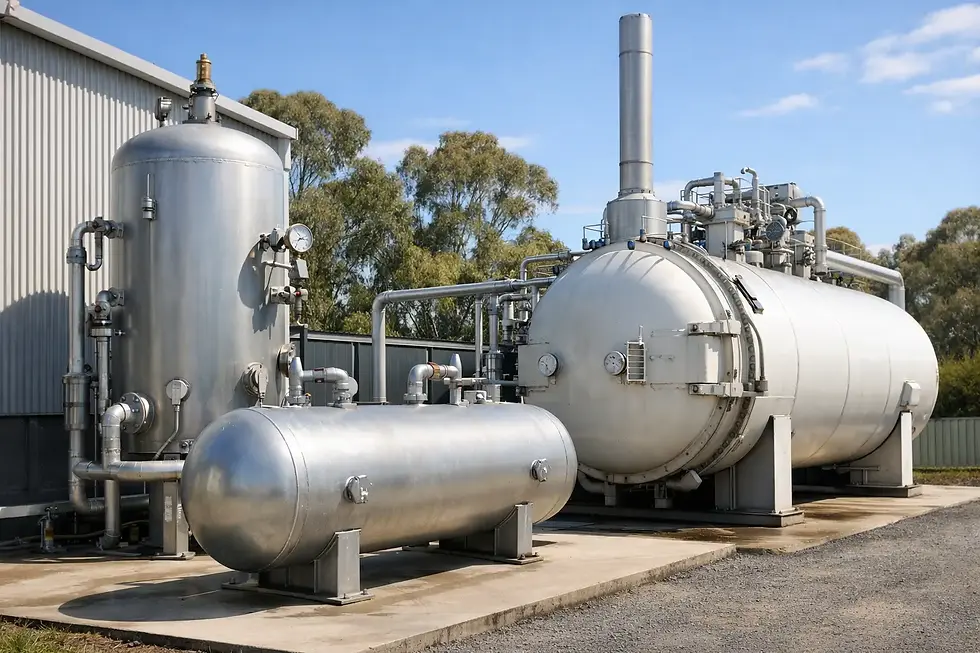
The register should identify all relevant pressure equipment, including boilers, pressure vessels, air receivers, heat exchangers, piping where within the inspection scope, pressure relief devices and associated controls. It should record the equipment identification number, location, service, design pressure and temperature, volume, contents, hazard level where determined, and the date and outcome of the last inspection.
Just as importantly, the register should identify equipment that has been decommissioned, removed, mothballed or placed outside the normal inspection cycle. An item that is isolated but still pressurised, or returned to service after a long period idle, requires deliberate control. Its status should never be assumed from an outdated register entry.
Where original design information is missing, the appropriate response is not to treat the asset as exempt. An engineering review may be required to establish the available evidence, determine operating limitations and identify what further examination or assessment is necessary before continued service can be supported.
Identify credible damage mechanisms
Inspection planning should be informed by the vessel's actual service, not only its nameplate. Consider the process fluid, contaminants, operating temperature, pressure cycles, start-stop frequency, vibration, insulation condition, external environment and maintenance practices.
For example, an externally insulated vessel may be susceptible to corrosion under insulation even when no external deterioration is visible. A vessel in wet compressed-air service may experience internal corrosion if drainage and moisture control are poor. Steam equipment can be affected by oxygen corrosion, water chemistry problems, overheating or inadequate control of low-water protection.
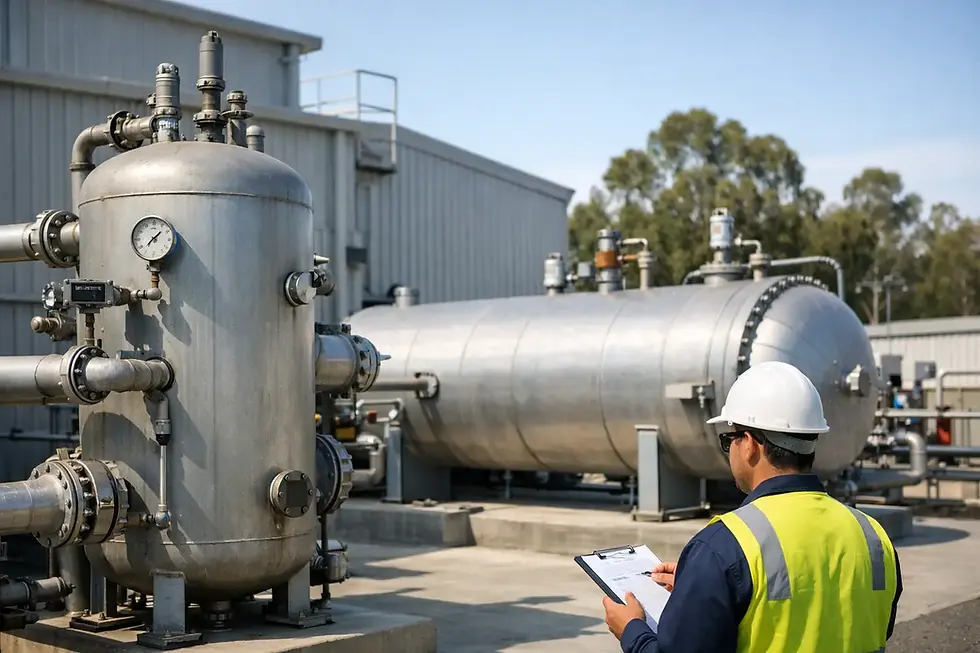
A competent in-service inspector considers these conditions when setting the inspection scope. This may include external examination, internal examination, thickness measurement, non-destructive testing, pressure-relief device assessment and review of operating controls. Not every method is required for every item, but the basis for the selected methods should be clear.
Use a competent, independent in-service inspector
AS 3788 establishes requirements for in-service inspectors. For asset owners, the practical requirement is to engage a person with appropriate competence, experience and formal credentials for the equipment and inspection activity involved.
AICIP accreditation provides an established Australian benchmark for pressure equipment in-service inspection competence. It is particularly relevant where inspection decisions affect continued operation, repair recommendations, inspection intervals or certification. Additional ASME and National Board credentials can also be relevant where equipment has international design, manufacture, repair or inspection history.
Competence alone is not the full consideration. Independence matters. The person determining equipment condition and recommending action should be able to provide objective advice without a commercial interest in repair, fabrication or equipment replacement. This protects the asset owner from both under-scoping and unnecessary work.
An inspector should have access to the information needed to form a sound opinion, including previous reports, thickness data, operating records and details of any repairs or alterations. Where information is withheld or unavailable, the report should state the limitation and its effect on the inspection conclusion.
Plan inspections around operating risk
A useful inspection programme coordinates planned outage windows with the examination required. Internal access, cleaning, scaffold, insulation removal and non-destructive testing often need lead time. Leaving these arrangements until a vessel is already overdue can create avoidable production pressure and compromise the quality of the inspection.
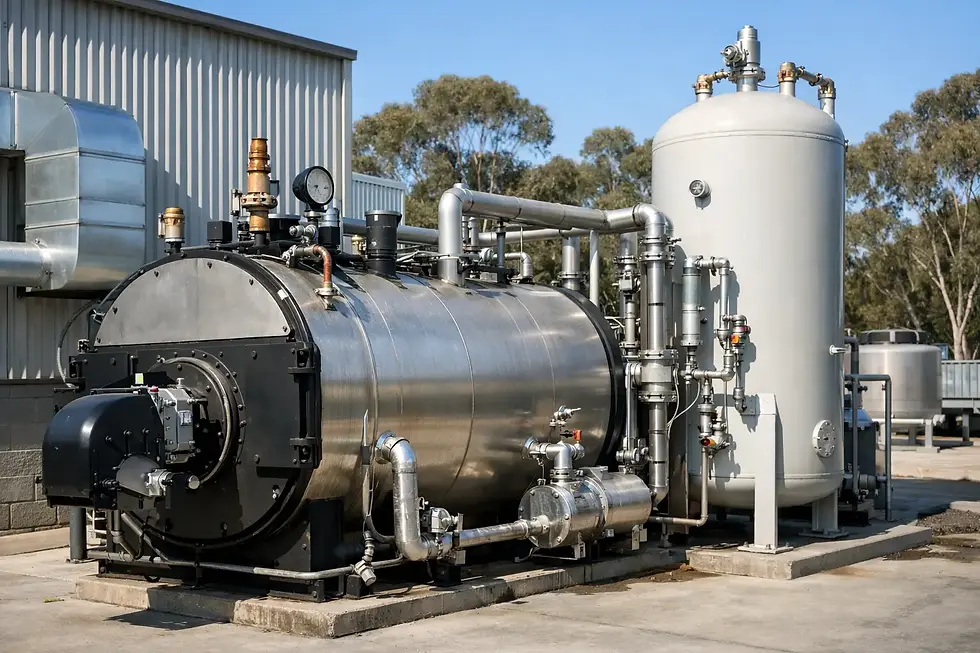
For boilers, inspection planning should also account for safe isolation, cooling, draining, access to waterside and fireside areas, and the availability of operational records. Boiler controls, safety valves, water level devices and safety interlocks require attention alongside the pressure boundary itself. A boiler shell may appear sound while its protective systems have not been adequately tested or maintained.
The inspection interval should not be treated as permission to ignore changing conditions between inspections. Maintenance and operations personnel should have a clear escalation path for leaks, pressure instability, unusual vibration, corrosion, damaged insulation, repeated relief valve lifting, control faults or process changes. These may justify an earlier inspection or engineering review.
Repairs and alterations need formal control
Repairs and alterations can affect pressure integrity, design assumptions and future inspection requirements. They should be documented, assessed and completed to the applicable fabrication, repair and examination requirements. The records should identify the work performed, materials used, welding and examination details where relevant, and the basis on which the item was returned to service.
A common compliance weakness is a repair completed during a shutdown without its effect being incorporated into the equipment history. The next inspector then works from incomplete information, and the asset owner loses a critical part of the integrity record.
Keep records that can withstand scrutiny
Inspection records are evidence of control. They should enable an informed person to understand what equipment was examined, when it was examined, what methods were used, what condition was found, what limitations applied and what action is required before the next inspection.
A complete report generally includes equipment identification, inspection date, service conditions, observations, measurements, test results, photographs where useful, identified defects, recommendations, due dates and the inspector's conclusion on continued operation. Supporting documents such as relief valve test records, non-destructive testing reports and repair documentation should be retained with the asset record.
Recommendations must be managed to closure. A report that identifies corrosion, an overdue relief valve test or a damaged safety device does not itself control the risk. The responsible person should assign the action, set a completion date, verify completion and retain evidence. If a recommendation cannot be completed by the stated date, the equipment should be reassessed before continued operation is assumed.
Common gaps in AS 3788 compliance
The most significant gaps are usually administrative and operational rather than deliberate disregard for safety. Equipment registers may omit old receivers or auxiliary vessels. Inspection dates may be tracked in separate spreadsheets. Relief valve records may sit with a contractor while vessel reports sit in maintenance files. Repairs may be recorded in a work order but not in the integrity history.
Another frequent issue is relying on visual checks by site personnel as a substitute for the prescribed in-service inspection process. Operator checks are valuable and should be encouraged, but they do not replace examination and certification by a competent in-service inspector.
For South Australian asset owners, Pressure Vessel Inspections Pty Ltd provides independent inspection and engineering advice through AICIP-accredited personnel, supported by an ISO 9001:2015 quality system. The value of independent review is not merely a certificate. It is a clear technical position on equipment condition, operating risk and the actions required to support continued service.
The most useful time to review compliance is before a vessel becomes due, a shutdown is committed or a defect forces the issue. A current register, a justified inspection plan and records that show decisions were made by competent people give operations teams room to act deliberately rather than under pressure.
Comments