

Pressure Equipment Risk Management Guide
A boiler can remain in production while its safety margin is being eroded by corrosion, fatigue, poor water treatment or an ineffective protective device. That is why a pressure equipment risk management guide must do more than nominate inspection dates. It must give the asset owner a disciplined basis for identifying credible failure mechanisms, controlling exposure and retaining evidence that decisions are technically defensible.
For Australian operators, the starting point is the equipment's actual service duty, condition and consequence of failure. AS 3788 provides the principal framework for in-service inspection of pressure equipment, but it does not remove the need to meet applicable work health and safety obligations, plant registration requirements and site-specific operating controls. Risk management is therefore a continuing operating process, not an annual compliance exercise.
Establish the pressure equipment risk profile
An effective program begins with an accurate equipment register. Each item should be uniquely identified and linked to its design and manufacturing records, design registration where applicable, operating history, inspection reports, repair history and certification status. Boilers, pressure vessels, piping, safety valves and associated controls should be considered as a connected system, rather than as isolated assets.
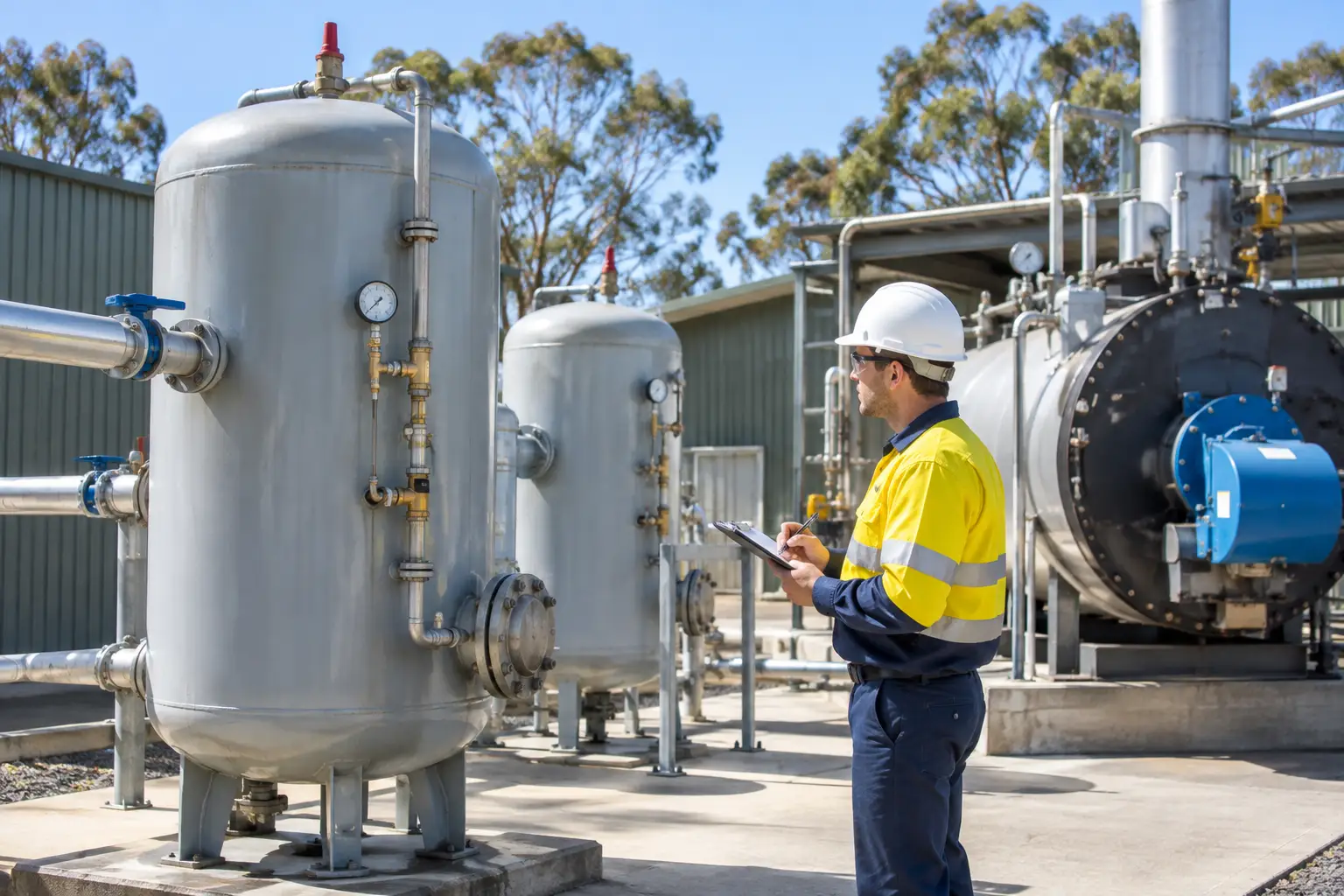
The risk profile should describe what can fail, why it might fail and who or what could be exposed. A small air receiver in a segregated service area does not present the same risk as a steam boiler supplying a food processing line, or a vessel containing hazardous process media near occupied areas. Pressure, temperature, stored energy, fluid hazard, location, occupancy, cycling duty and accessibility all influence the consequence assessment.
Condition is equally significant. An item that has operated within stable limits and has a complete inspection history may justify a different inspection approach from equipment with uncertain provenance, altered duty or repeated repairs. Where records are incomplete, uncertainty must be treated as a risk factor rather than assumed away.
Confirm the equipment's real duty
Nameplate conditions are not necessarily operating conditions. Changes in throughput, process chemistry, operating temperatures, start-stop cycles or maintenance practices can materially change the degradation rate. A vessel originally used for dry compressed air, for example, may require reassessment if moisture carry-over, corrosive contaminants or frequent pressure cycling have become part of normal service.
Maintenance and engineering managers should ensure operating envelopes are documented and understood by operators. This includes maximum allowable working pressure, temperature limits, permitted media, minimum levels where relevant, alarm and trip settings, and the purpose of each protective device. Repeated nuisance alarms, bypassed interlocks or unexplained relief-valve lifting are operating signals that require engineering review, not routine workarounds.
Apply a pressure equipment risk management guide to inspection
Inspection intervals should be based on the requirements of AS 3788, the equipment's condition, service history and recognised deterioration mechanisms. Time-based inspection remains necessary for many assets, but condition-based decisions can improve safety and planning when they are supported by sufficient evidence. The trade-off is straightforward: extending an interval without reliable condition data increases uncertainty; inspecting more frequently than needed can create avoidable outage and access costs.
An in-service inspection should be planned around the expected damage mechanisms. General corrosion, localised pitting, erosion, corrosion under insulation, cracking, overheating, fatigue, mechanical damage and lining deterioration each require different inspection methods and access arrangements. External visual examination alone may be insufficient where the risk lies beneath insulation, inside inaccessible areas or within highly stressed regions.
Before an outage, define the scope with the inspector and relevant technical personnel. Confirm the vessel history, previous recommendations, process isolation requirements, cleaning method, access, lighting, thickness measurement locations and non-destructive examination requirements. A poorly prepared inspection can produce limited findings, extend the shutdown and leave critical areas unexamined.
AICIP-accredited in-service inspectors assess equipment against the applicable requirements of AS 3788 and use inspection findings to determine whether continued operation is appropriate. Their role is not simply to identify visible defects. It is to evaluate the significance of observed conditions, specify required actions and provide certification or recommendations founded on independent technical judgement.
Control the hazards that inspection alone cannot remove
Inspection identifies condition. It does not by itself prevent overpressure, overheating or uncontrolled release. These risks require operating and maintenance controls that remain effective between inspections.
Protective devices need particular attention. Safety valves must be correctly selected, set, maintained and tested for the protected system. Isolation arrangements, discharge locations and any common headers should not compromise their capacity to relieve safely. Pressure and temperature instruments should be suitable for the service and calibrated at intervals justified by their criticality. A pressure reading that operators cannot trust is not a control.
For boilers, water chemistry and feedwater management are central risk controls. Scale, oxygen corrosion, carry-over and low-water events can progress rapidly and may cause damage before the next planned inspection. Water treatment records, blowdown practices, low-water protection testing and operator response to abnormal conditions should be reviewed together.
Operating procedures should define normal start-up, shutdown, emergency response and isolation steps. They should also state who may alter setpoints, defeat an interlock or return equipment to service after repair. Temporary changes are often where risk accumulates, particularly when production pressure is high. A formal management-of-change process helps ensure that altered process conditions, repairs, replacement parts and control-system changes receive appropriate technical review.
Make repairs and alterations traceable
A repair can restore integrity, but an undocumented or poorly controlled repair can create a new uncertainty. The repair scope should identify the defect, its cause where known, the proposed method, materials, welding requirements, examination and pressure testing requirements. The work must be assessed against the relevant construction code, applicable standards and regulatory requirements.
Alterations require additional care because they may affect design conditions, loading, relief capacity or registration status. Adding nozzles, changing vessel use, increasing operating pressure or modifying controls should never be treated as routine maintenance. Engineering review should establish whether the original design remains suitable and whether the change triggers further compliance actions.
Retain a complete repair dossier. At a minimum, it should include the approved scope, material traceability where required, welding documentation, inspection and test results, drawings or marked-up records, and the basis for return to service. These records allow later inspectors and asset owners to understand what was done and why.
Keep records that support defensible decisions
The value of an inspection report is reduced if its recommendations disappear into a maintenance system without ownership or close-out evidence. Each recommendation should have a responsible person, a due date, risk priority and documented verification of completion. Where a recommendation cannot be completed by the nominated date, the asset owner should record an interim risk assessment and approved compensating controls.
Useful pressure equipment records generally include:
current equipment identification and design information;
inspection reports, certificates and condition-monitoring results;
safety-valve test and maintenance records;
repair, alteration and engineering assessment documentation; and
operating incidents, alarm trends and corrective actions.
These records support compliance, but their greater value is operational. They enable trends to be identified before a condition becomes a failure. Recurring wall-loss readings, repeated tube leaks, frequent relief events or rising maintenance demand may each indicate that the current control strategy is no longer adequate.
Assign clear accountability
Pressure equipment risk is often spread across operations, maintenance, engineering and safety functions. Without defined accountability, critical tasks can be assumed rather than completed. The asset owner should nominate responsible roles for operating checks, maintenance planning, inspection coordination, recommendation close-out, record control and escalation of abnormal conditions.
Competency also needs to match the task. Operators require practical understanding of the equipment's limits and protective systems. Maintenance personnel need controlled procedures for isolation, reinstatement and work on pressure boundaries. Management needs visibility of overdue inspections, open recommendations and equipment that is operating under temporary restrictions.
Independent inspection advice is valuable where competing priorities exist. An inspector who is independent of the manufacturer, repairer and asset owner can provide objective findings focused on safety, compliance and continued serviceability. Pressure Vessel Inspections Pty Ltd applies this approach through AICIP-accredited inspection capability, supported by experience across AS 3788, ASME and National Board inspection contexts.
A well-managed pressure asset should never rely on optimism, informal knowledge or a certificate filed after the event. Keep the condition history current, act on emerging evidence and seek competent independent review whenever service conditions or equipment integrity are uncertain. That discipline protects people first, while giving production teams a firmer basis for planning work before an unplanned shutdown makes the decision for them.


Comments