

Steam Plant Risks That Demand Early Action
A steam system rarely gives an operator the convenience of failing at a quiet time. A leaking valve, degraded boiler tube, lifting safety valve or unstable water level can rapidly become a personnel safety event, a production interruption and a compliance concern. Steam plant risks must therefore be assessed as whole-of-system risks, not simply as a question of whether the boiler still produces steam.
For asset owners, the practical objective is clear: understand the condition of each pressure-retaining component, maintain effective safeguards, and retain inspection and operating records that support safe continued service. This requires more than a calendar-based shutdown. It requires informed judgement about equipment history, duty, deterioration mechanisms and the applicable inspection requirements.
Why steam plant risks extend beyond the boiler
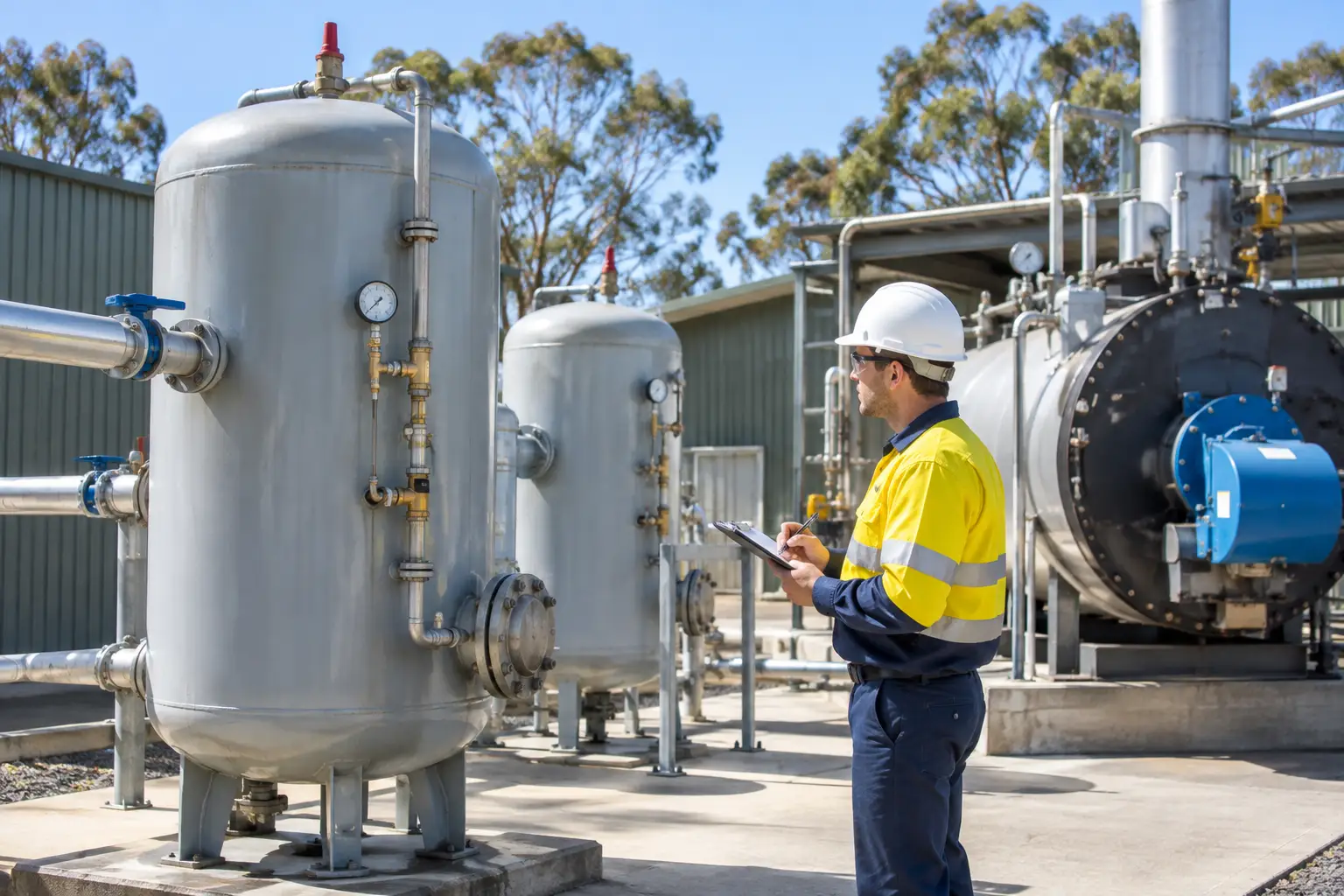
The boiler is often the most visible item in a steam plant, but it is only one part of a pressurised system. Steam and condensate pipework, separators, pressure vessels, blowdown arrangements, safety valves, feedwater systems, controls and associated protective devices can all affect the integrity of the plant.
A fault in any one of these areas may expose workers to high-temperature fluids, pressure release, hot surfaces or unexpected plant behaviour. It can also place the boiler under operating conditions outside its intended design envelope. For example, poor feedwater quality may initiate internal corrosion or scale formation. A control fault may contribute to low-water conditions. An isolated or incorrectly set safety valve may remove a critical line of defence against overpressure.
The consequence is not always an immediate catastrophic failure. Many serious events are preceded by smaller signs: increased make-up water demand, unexplained pressure variation, frequent safety valve discharge, steam leaks, poor steam quality, declining efficiency or repeated control alarms. These symptoms require investigation rather than normalisation.
The principal steam plant risks
Pressure boundary deterioration
Pressure-retaining parts deteriorate for reasons that are often specific to the equipment and its service. Internal corrosion can occur where water chemistry is poorly controlled or where oxygen ingress is present. External corrosion may develop beneath lagging, around leaks, at supports or in poorly drained areas. Erosion can affect areas of high-velocity flow, particularly where wet steam, entrained water or solids are present.
Thermal fatigue is another consideration. Repeated start-up and shutdown cycles, rapid firing changes and uneven heating can impose stresses that are not apparent during normal operation. A plant operating intermittently may experience different deterioration mechanisms from one operating continuously, even where both have similar running hours.
The appropriate inspection scope depends on the equipment condition, service history and applicable requirements. A visual examination alone may not be enough where the mechanism of concern is internal, localised or difficult to access. Thickness measurement, non-destructive examination, internal inspection and engineering assessment may be required to establish whether continued operation is justified.
Water treatment and low-water exposure
Water chemistry is fundamental to boiler integrity. Scale reduces heat transfer and can cause localised overheating of pressure parts. Corrosion products can accumulate, obstruct flow paths and mask underlying metal loss. Foaming and carryover may affect steam quality and create problems further downstream in valves, process equipment and condensate systems.
Low-water conditions remain among the most significant boiler hazards. If heating surfaces are exposed without adequate cooling, material temperature can rise rapidly and strength can be reduced. The risk is influenced not only by the reliability of level controls, but also by the testing, maintenance and functional verification of low-water protection devices.
Operators should not assume that an indicating level, alarm, interlock and shutdown device provide independent protection merely because they are fitted. Their configuration, proof testing, maintenance history and response under realistic conditions matter. A formal review of protective functions is particularly valuable after control modifications, prolonged shutdowns or changes in operating practice.
Safety valve and protective device failure
Safety valves are final protective devices, not routine process controls. Their ability to open at the required pressure, discharge sufficient capacity and reseat appropriately is essential to the safe operation of pressure equipment. Corrosion, contamination, poor maintenance, incorrect settings, discharge piping issues and unauthorised isolation can compromise that function.
Other devices deserve the same disciplined attention. Pressure controls, high-pressure cut-outs, flame safeguards, feedwater controls, level alarms and burner management systems each have a defined role. A recurring trip may be inconvenient, but bypassing or defeating a protective device changes the risk profile of the plant and can create a far more serious problem.
Steam, condensate and pipework hazards
Steam leaks are frequently underestimated because they may begin as a small visible plume or an audible escape of steam. High-pressure steam can cause severe burns and may cut through tissue at close range. Leaks can also obscure hazards, damage insulation, accelerate corrosion and reduce plant efficiency.
Condensate presents separate risks. Poor drainage, failed steam traps, incorrect pipe gradients or inadequate warm-up procedures can lead to water hammer. The resulting pressure shock can damage valves, joints, pipe supports and connected equipment. In severe cases, pipe movement can endanger people working nearby.
Steam pipework should be considered within the inspection strategy, particularly at expansion points, supports, low points, drains, branch connections and areas where insulation may conceal external deterioration. Changes to process demand or operating pressure can also alter loads and flow conditions in ways that were not considered when the system was installed.
Inspection is a condition assessment, not a paperwork exercise
AS 3788 provides the recognised Australian framework for the in-service inspection of pressure equipment. Its application supports a structured approach to inspection intervals, examination scope, condition assessment and records. However, the standard is not a substitute for competent engineering judgement.
The inspection interval and method should reflect the equipment's risk profile. Age alone does not determine condition. A newer boiler with poor water treatment, uncertain maintenance practices or aggressive duty may warrant close attention. Conversely, an older item with a well-documented history, controlled operating conditions and favourable inspection findings may be managed differently, subject to an appropriate assessment.
A useful inspection outcome identifies more than whether an item passed or failed on the day. It records the equipment identity, observed condition, defects, limitations, recommended actions and the basis for any continued-service decision. This gives maintenance and engineering teams a defensible record for planning work, managing risk and demonstrating that pressure equipment has been assessed by a competent person.
Independent inspection is particularly important where repair, maintenance and certification decisions intersect. An AICIP-accredited in-service inspector can provide an objective view of equipment condition and applicable inspection requirements without a commercial interest in the repair outcome. For complex or non-standard equipment, ASME and National Board experience can also assist where design, repair or international pressure equipment requirements need to be considered.
Managing steam plant risks between inspections
An external and internal inspection cannot compensate for weak day-to-day operating discipline. Plant owners should ensure operating procedures address start-up, warm-up, normal operation, blowdown, shutdown, emergency response and isolation. These procedures must be available to the people who use them and aligned with the actual plant configuration.
Records are equally important. Water treatment results, safety valve servicing, control tests, alarm events, repairs, modifications, thickness readings and operating incidents form the history from which deterioration trends can be recognised. Scattered records held in individual files or staff memory make it difficult to establish whether a defect is isolated, recurring or worsening.
Maintenance changes should be controlled. Replacing a valve with a similar-looking item, modifying a discharge line, changing a burner control sequence or altering set pressures can have implications beyond the immediate task. Where pressure-retaining parts or protective functions are affected, an engineering review before return to service is a prudent control.
Pressure Vessel Inspections Pty Ltd applies scheduled and condition-based inspection, certification and independent engineering advice to help asset owners make these decisions on evidence rather than assumption. Its work is performed within an ISO 9001:2015 quality system and focused on the safe, compliant operation of in-service pressure equipment.
When an early assessment is warranted
Do not wait for the next scheduled inspection where the plant shows a material change in condition or performance. Early review is warranted after a low-water incident, safety valve discharge of uncertain cause, significant water chemistry excursion, evidence of leakage or corrosion, pressure boundary repair, prolonged lay-up, control-system modification or unexplained operating instability.
The same applies when equipment records are incomplete. Missing inspection reports, unclear equipment registration details, unidentified vessels or uncertain safety valve history are not merely administrative gaps. They limit an owner’s ability to demonstrate that plant condition and protective measures are understood.
Safe steam operation is built through repeated, verifiable decisions: operate within limits, investigate abnormal behaviour, preserve accurate records and obtain competent independent advice before uncertainty becomes exposure.


Comments