

How to Reduce Unplanned Boiler Shutdowns
- PVI
- Aug 27
- 6 min read
A boiler rarely shuts down without prior evidence. Low-water trips, unstable combustion, tube leaks, safety-valve concerns and control faults are usually preceded by changes in operating behaviour, inspection findings or maintenance history. To reduce unplanned boiler shutdowns, plant owners need to treat those signals as engineering information, not isolated maintenance events.
For facilities with continuous steam demand, an unexpected boiler outage can stop production, compromise product quality and create difficult decisions about temporary operation. It can also expose shortcomings in inspection records, maintenance planning and regulatory compliance. The most effective response is a disciplined programme that combines competent operation, planned maintenance and independent in-service inspection.
Start with the failure mechanisms that matter
Boiler reliability is not improved by applying the same maintenance interval to every item of plant. The starting point is to understand the credible deterioration and failure mechanisms for the particular boiler, its water treatment regime, duty cycle, fuel system and steam distribution arrangement.
Internal corrosion, oxygen pitting, scale deposition and under-deposit corrosion can progressively reduce heat transfer and wall thickness. Poor combustion can produce soot fouling, flame instability, excess carbon monoxide or refractory damage. Cycling duty may contribute to fatigue at connections, tube ends, supports and pressure-part attachments. External corrosion at lagging interfaces, leaking valves or inadequately protected areas can remain concealed until a planned outage or a more serious defect occurs.
A useful condition assessment considers both the pressure boundary and the systems that protect it. A boiler can be structurally sound yet unavailable because of unreliable feedwater controls, burner management issues, safety-valve defects or instrumentation that no longer performs as intended. Conversely, a boiler that appears to run normally may have a developing pressure-part defect that only a thorough internal examination will reveal.
This assessment should be specific to the asset. A food processor operating a standby boiler intermittently faces different risks from a manufacturing site running a boiler near continuous load. Older equipment may need closer attention to corrosion allowance, repair history and obsolescence of controls. The correct scope and interval depend on condition, service history and the applicable inspection requirements, not simply age.
Use AS 3788 inspection as a reliability control
AS 3788 provides the recognised Australian framework for in-service inspection of pressure equipment. Its purpose is primarily safety and compliance, but a properly executed inspection programme also provides an early-warning mechanism for availability risks.
Scheduled external and internal inspections allow the condition of the boiler pressure parts, mountings and associated equipment to be assessed before defects become forced outages. Inspection planning should account for prior reports, thickness measurements, repairs, operating conditions, water chemistry records and any changes to duty. Defects should be described clearly, their significance evaluated and actions assigned with realistic completion dates.
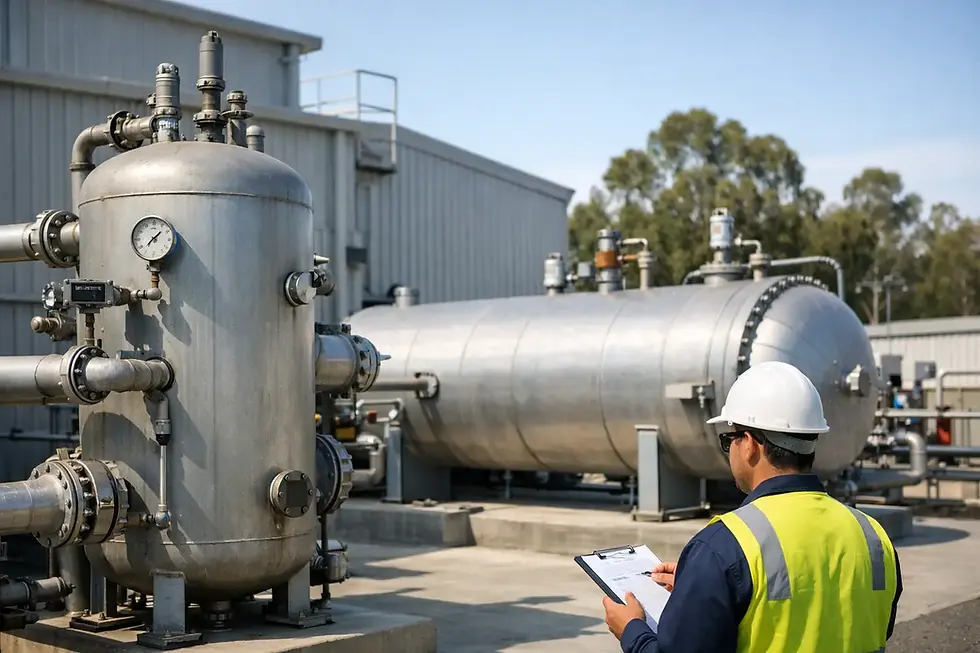
Independent inspection is particularly valuable where competing priorities exist. Operations may need steam, maintenance teams may be managing a constrained shutdown window, and a repair provider may be focused on a preferred scope of work. An AICIP-accredited in-service inspector can provide objective advice on equipment condition, required corrective action and certification requirements, without manufacturer, repairer or asset-owner bias.
Inspection reports should not be filed and forgotten. They need to become part of the site maintenance and risk-management system. A recommendation to investigate localised corrosion, renew a leaking fitting or verify a safety device setting is not administrative close-out work. It is an opportunity to prevent a smaller anomaly from becoming a disruptive event.
Plan inspections around meaningful outage windows
Internal boiler inspections require suitable preparation. The boiler must be isolated, depressurised, cooled, drained, cleaned and made safe for entry where entry is required. Rushed preparation can obscure important areas and limit the quality of the examination.
Aligning inspection work with planned shutdowns reduces disruption, but only when the scope is developed early. Review the previous inspection report well before the outage. Identify areas requiring cleaning, non-destructive examination, thickness checks, access improvements or specialist assessment. Confirm that replacement parts, competent trades and water-treatment support are available if findings require prompt remediation.
A planned outage may need to be extended when inspection identifies a safety-critical defect. That decision is inconvenient, but it is materially different from a sudden shutdown during production with limited access to spares, labour and engineering support.
Control water chemistry and feedwater integrity
Many boiler failures begin in the water and condensate system rather than in the boiler itself. Water chemistry must be controlled to suit the boiler type, operating pressure, feedwater arrangement and manufacturer requirements. Treatment should be verified through routine testing, records and appropriate technical review, rather than assumed because chemicals are being dosed.
Key concerns include dissolved oxygen, pH, conductivity, hardness, total dissolved solids and contamination returning with condensate. A single process contamination event can alter boiler-water conditions quickly. Excessive carryover, foaming or frequent blowdown adjustments may indicate an underlying issue that deserves investigation.
Feedwater equipment also requires attention. Pumps, check valves, level controls, deaeration equipment and feedwater piping all influence boiler availability. Repeated low-water alarms, fluctuating drum level or unexplained pump cycling should be investigated before the protection system trips the boiler during a critical production period. Protective trips must never be bypassed to maintain output. Their operation is a warning that a fault needs correction.
Treat burner and control faults as leading indicators
Combustion and control systems often create the most visible operating interruptions. Failed flame detection, poor ignition performance, fuel-pressure variation, air-proving switch faults and damaged actuators can all cause lockouts. Resetting a burner without determining why it tripped can turn a short interruption into a recurring availability problem.
Trend the reasons for burner trips and operator call-outs. If a particular fault repeats, establish whether it is caused by a component, wiring issue, fuel quality variation, air-supply restriction, control logic or operating practice. Maintenance records should distinguish between a confirmed repair and a reset performed to restore service.
Instrument calibration also matters. Pressure, temperature, level and combustion measurements drive both control decisions and protective actions. A drifted transmitter may not immediately stop the boiler, but it can lead to unstable operation, inefficient firing or inappropriate trips. Calibration intervals should reflect service criticality and evidence of performance, not just a calendar date.
Build a maintenance plan from evidence
A maintenance plan should connect inspection findings, operator observations and failure history. Time-based tasks remain appropriate for many items, including statutory checks and consumable replacement. However, condition-based actions are often more effective for pressure-boundary condition, refractory, insulation, valves, pumps and controls.
The plan should define who owns each action, the required completion date, the acceptance criteria and the evidence needed to close it out. For significant defects, this may include engineering assessment, repair documentation, examination results and independent verification before return to service.
Sites benefit from separating defects into practical priority groups. Immediate action is needed where safe operation or compliance is affected. Planned corrective work suits defects that are stable but require repair before the next inspection or outage. Monitoring may be appropriate where deterioration is understood, measurable and within an engineering-defined limit. Monitoring is not a substitute for action when the rate or consequence of deterioration is uncertain.
Where boiler repairs are required, ensure the repair process is appropriate to the pressure equipment and repair scope. Material traceability, qualified welding procedures, competent personnel, required examinations and documentation can be critical to demonstrating the integrity of the completed work. Experience in ASME and National Board inspection contexts can also assist where equipment, repairs or documentation have international origins.
Give operators a defined role in reliability
Operators are often the first people to notice a change in boiler behaviour. Their checks should be clear, practical and supported by escalation criteria. An unusual noise, steam leak, change in blowdown behaviour, repeated alarm, fluctuating level or abnormal stack condition should be recorded and reviewed, not normalised as part of operating the plant.
Training must cover the reason for key checks as well as the procedure. When operators understand that a low-water trip protects the pressure boundary, or that a small condensate leak can drive external corrosion, reporting improves. It also helps maintenance and engineering teams receive more useful fault information.
Good shift records create a valuable history when an issue develops. Record operating load, alarms, water-test results, burner resets, chemical adjustments and abnormal observations in a consistent format. Over time, this information helps distinguish a one-off event from a recurring deterioration pattern.
Measure the warning signs before availability is lost
Reliable boiler operation is best managed with a small set of meaningful indicators. Repeated burner lockouts, low-water trips, water-chemistry excursions, unplanned maintenance hours, safety-device defects and overdue inspection actions all warrant management attention. The aim is not to produce a large dashboard. It is to identify trends early enough to plan intervention safely.
Pressure Vessel Inspections Pty Ltd provides independent in-service inspection and engineering advice for boilers and associated pressure equipment, supporting asset owners with condition assessment, certification and defensible inspection records. Advice should always be applied to the specific equipment, operating environment and compliance obligations at the site.
The most useful reliability question is not whether the boiler ran this week. It is whether the site can explain its current condition, its known defects and the controls in place before the next demand peak.
Comments