

Boiler Integrity Assessment for Safe Operation
- PVI
- Aug 23
- 6 min read
A boiler can remain in production while its condition progressively changes beyond what routine operation reveals. Corrosion beneath insulation, waterside scale, fatigue at attachments, refractory damage and ineffective safety devices may develop without an immediate loss of output. A boiler integrity assessment provides an independent basis for determining whether the equipment remains fit for service, what action is required, and how its inspection and certification obligations should be managed.
For Australian asset owners, the assessment is not simply a maintenance activity or a paperwork exercise. It is a disciplined examination of pressure boundary condition, operating history, protective systems and available records against the requirements applicable to the plant. Its purpose is to support safe operation, defensible compliance and informed decisions about repair, monitoring or continued service.
What a Boiler Integrity Assessment Examines
The scope should reflect the boiler type, design, service conditions, age, consequence of failure and documented history. A small packaged steam boiler in clean, controlled service will not present the same risk profile as a high-duty unit exposed to variable water chemistry, cyclic loading or corrosive external conditions. Inspection planning must therefore be based on evidence rather than a generic checklist.
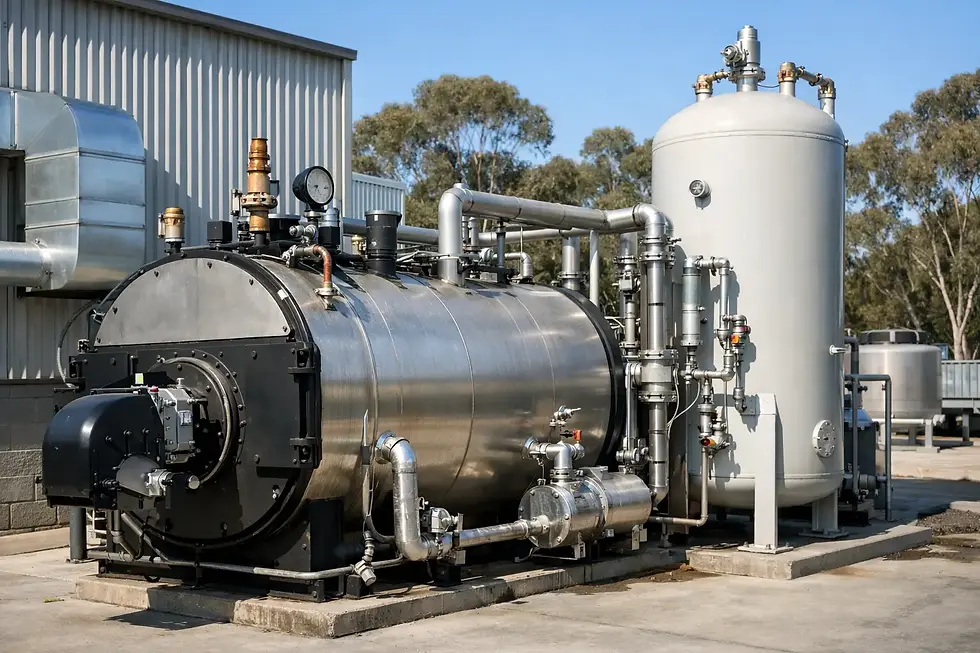
The pressure boundary is central to the assessment. This includes the shell, drums, tubes, headers, furnace surfaces, end plates, nozzles, welded connections and other pressure-retaining components. The inspector considers visible condition, signs of leakage, distortion, localised overheating, corrosion, erosion, cracking and repair history. Internal and external examinations may reveal different deterioration mechanisms, which is why access, isolation and preparation have a direct effect on the quality of the result.
The assessment also considers fittings and protective devices. Safety valves, pressure gauges, water-level indicators, low-water protection, controls and interlocks each contribute to safe boiler operation. A sound pressure shell alone does not demonstrate that the boiler is safe to return to service if its protective systems are not correctly maintained, tested or documented.
Operating and maintenance records provide essential context. Water treatment results, blowdown practices, previous inspection reports, thickness readings, repair documentation, safety-valve test records and operating excursions help establish whether observed condition is isolated or part of an ongoing mechanism. Where records are incomplete, that limitation should be identified clearly rather than assumed away.
AS 3788 and the Need for Independent Judgement
AS 3788 provides the recognised Australian framework for the in-service inspection of pressure equipment. It guides the assessment of condition, inspection intervals, inspection methods, records and continued suitability for service. Applying the standard properly requires more than confirming a nominal due date. The inspector must evaluate the equipment, its service and the evidence available to determine an appropriate inspection approach.
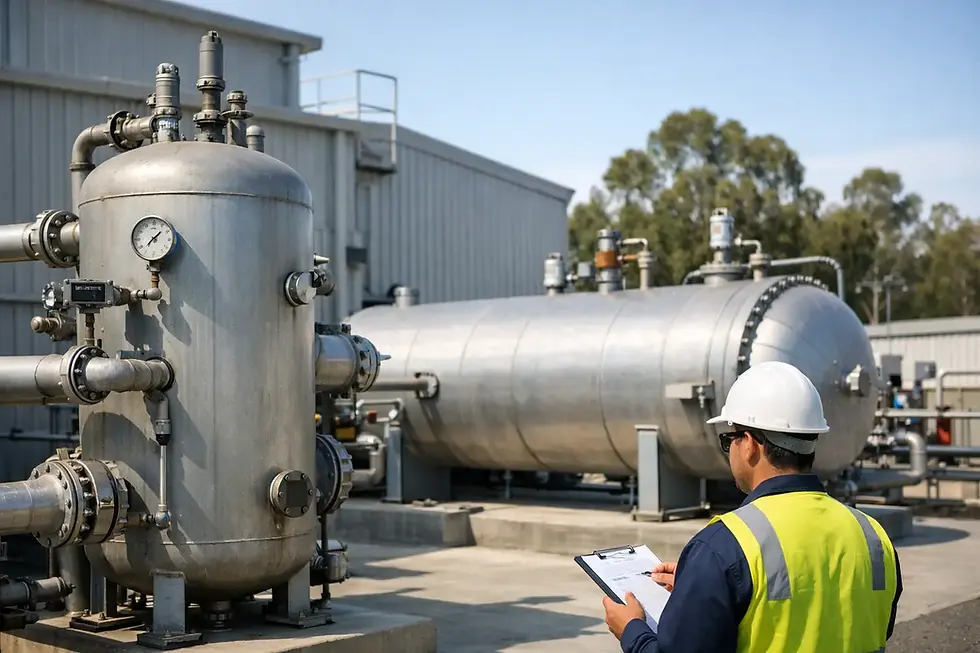
AICIP-accredited In-Service Inspectors have prescribed competency requirements for this work. Their role is particularly important where the assessment must distinguish between normal surface condition and evidence of a developing defect, or where inspection findings need to be translated into practical decisions for the asset owner.
Independence matters at this point. An inspector who is not tied to equipment manufacture, repair work or plant ownership can provide advice focused on condition, compliance and operational risk. That does not mean every finding requires immediate replacement. It means recommendations should be proportionate, technically justified and documented in the client’s best interests.
For boilers with international design, manufacture or repair considerations, ASME and National Board experience can also assist in interpreting supporting documentation and repair requirements. The applicable Australian regulatory and in-service obligations remain central, but the original construction code and authorised inspection history may be relevant to a complete assessment.
From Preparation to Certification
A worthwhile assessment begins before the inspector arrives on site. The boiler should be safely shut down, isolated, depressurised, drained and made accessible in accordance with site procedures. Manhole and handhole covers, where fitted, may need to be removed. Surfaces should be sufficiently clean for meaningful examination. Refractory, insulation or lagging should not be removed indiscriminately, but targeted removal may be necessary where condition, leakage staining or prior findings indicate a credible concern.
The inspection plan should define the examination required and the records to be reviewed. Visual examination is often the foundation, but it is not the only tool. Ultrasonic thickness measurement may be used to quantify wall loss. Other non-destructive testing methods may be appropriate where cracking, weld condition or localised damage is suspected. The correct method depends on the likely degradation mechanism and the area being assessed.
During the inspection, the focus is on both condition and context. A local pit has a different significance from general wall thinning. A repair performed under an appropriate procedure and supported by records is different from an undocumented alteration. Repeated tube failures may indicate a water chemistry, firing or circulation issue that cannot be resolved by replacing the affected section alone.
Following examination, findings should be recorded in a report that identifies the equipment, scope, observed condition, limitations, required actions and inspection outcome. Where the boiler is suitable for continued operation, certification should reflect the inspection results and applicable requirements. Where it is not, the report should state the basis for restrictions, repairs, further assessment or removal from service.
Common Findings and Their Operational Meaning
Waterside corrosion and scale are frequent concerns because they can reduce heat transfer, accelerate metal loss and contribute to localised overheating. The visible deposit is not the whole issue. Its location, extent, underlying metal condition and relationship to water treatment records determine the appropriate response. Cleaning without correcting the underlying chemistry or operating cause can allow the problem to return.
Fireside deterioration can arise from combustion conditions, fuel contaminants, refractory failure, poor burner performance or condensate-related corrosion during idle periods. Tube distortion, hot spots, damaged refractory and leakage evidence require careful interpretation. In some cases, the immediate response is repair. In others, further engineering review is needed to establish remaining life or determine whether a condition change has altered the inspection interval.
External corrosion is often underestimated, particularly beneath damaged cladding, insulation or at low points where moisture is retained. A boiler room may appear dry during inspection while previous washdown, roof leaks or condensate exposure have created a long-term corrosion environment. The assessment should consider these site conditions, not only the exposed steelwork.
Safety-device deficiencies deserve the same discipline as pressure-boundary findings. Missing test evidence, incorrectly selected gauges, inoperative low-water protection or safety valves with uncertain maintenance history can prevent confident certification. These are manageable issues when identified early, but they should not be treated as administrative details.
Setting Inspection Intervals Without Guesswork
Inspection intervals should not be treated as a fixed calendar exercise detached from boiler condition. AS 3788 provides the framework, but the appropriate interval depends on the equipment and its history. Stable condition supported by reliable records may justify a planned approach different from a boiler with recurrent corrosion, uncertain repairs, changed duty or incomplete documentation.
Condition-based inspection is valuable where it is supported by sound baseline data and repeatable measurements. It can help owners direct shutdown resources to the areas of greatest risk and avoid unnecessary intrusive work. However, condition-based planning is not a substitute for inspection. It depends on suitable access, credible degradation rates, effective controls and timely review by a competent inspector.
Facilities managers and engineering teams should also consider the production consequences of the inspection plan. Aligning examinations with planned outages can reduce disruption, but postponing work solely to avoid downtime may increase exposure if leakage, abnormal water use, unstable pressure control or unexplained repairs have already indicated a problem. The right decision is evidence-based, not convenience-based.
Records That Support Defensible Decisions
A boiler’s inspection file should allow a competent person to understand its identity, service history, past condition and current status without relying on informal site knowledge. This includes design and registration information where applicable, inspection reports, certificates, test records, repair documentation, non-destructive testing results and relevant operating data.
Good records improve more than compliance. They allow deterioration trends to be identified, enable consistent decisions when personnel change and provide a stronger basis for budgeting repairs or replacement. They also reduce the risk that a previous limitation, recommendation or condition warning is lost between shutdowns.
Pressure Vessel Inspections Pty Ltd applies an ISO 9001:2015 quality system to inspection and certification activities, with advice delivered independently of manufacturers, repairers and asset owners. For operators, that independence supports clear decisions when safety, production and capital planning need to be balanced.
A well-prepared boiler integrity assessment gives plant teams something more useful than a pass or fail result: a clear picture of condition, a documented compliance position and practical priorities for the next operating period. When the evidence is gathered before a defect becomes an outage, the most valuable outcome is time to act deliberately.
Comments