

Boiler Certification Process for Safe Operation
- PVI
- Aug 13
- 6 min read
A boiler certificate is not simply evidence that an inspection occurred. The boiler certification process is a structured assessment of whether a specific item of pressure equipment can continue operating safely within defined limits. For plant owners, the quality of that process affects worker safety, production continuity, insurance confidence and the defensibility of compliance records following an incident.
In South Australian industrial facilities, the process should be led by an independent, appropriately qualified in-service inspector who can assess the boiler's condition without a commercial interest in repair work, manufacture or ongoing operation. The inspection must be supported by accurate plant information, access to the equipment and timely action on identified defects.
What the boiler certification process assesses
Boiler certification centres on the equipment's in-service integrity. It considers whether the pressure-retaining parts, protective devices and associated controls remain suitable for operation at the nominated pressure, temperature and duty. This is broader than a routine maintenance check and cannot be reduced to a visual walk-around.
AS 3788 provides the principal Australian framework for in-service inspection of pressure equipment. Its application requires informed judgement. Inspection intervals, inspection methods and the extent of examination depend on the boiler type, age, operating history, previous findings, fluid service, corrosion mechanisms and consequences of failure.
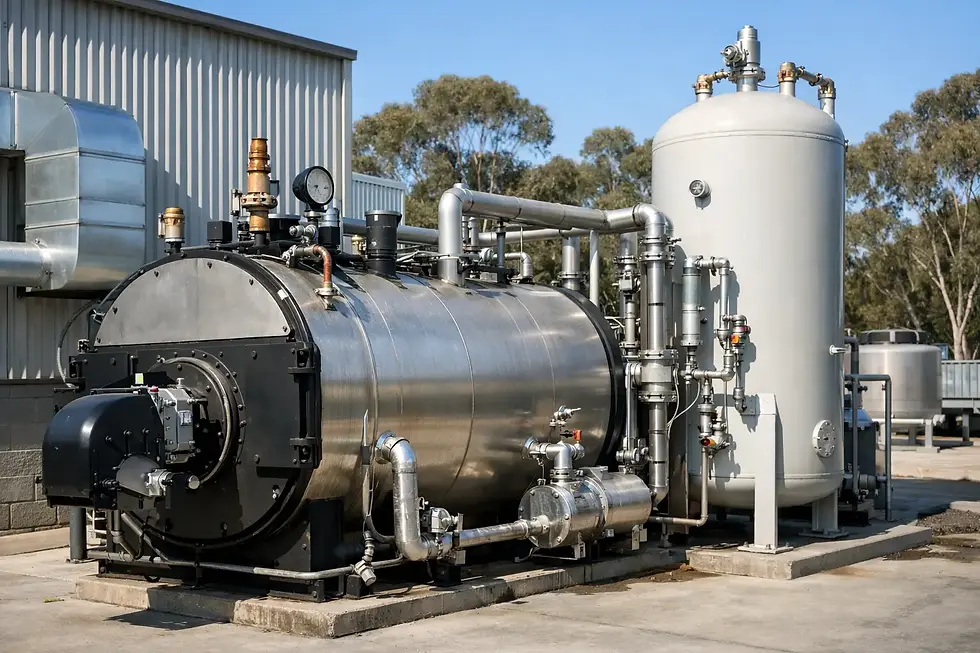
The process commonly addresses the boiler pressure vessel, furnace and tube surfaces where accessible, steam and feedwater connections, safety valves, pressure gauges, water-level controls, blowdown arrangements and evidence of leakage or overheating. It also considers the operating environment. Poor water treatment, wet insulation, combustion-side deposits, vibration, inadequate drainage and unrecorded repairs can each affect integrity.
Certification does not mean that a boiler is indefinitely fit for service. It confirms a finding at a point in time, subject to stated operating conditions, limitations and future inspection requirements. An equipment owner remains responsible for operating the boiler within those conditions and maintaining the asset between inspections.
Establish the inspection basis before shutdown
The most efficient certification work begins before the boiler is opened. The owner or site representative should provide the inspector with the current equipment register, manufacturer details, design and operating data, previous inspection reports, certificates, repair records and details of any known operating concerns.
Useful records include operating pressure and temperature, design pressure, serial number, year of manufacture, safety valve test information, water chemistry records, maintenance history and reports of trips, leaks or process upsets. Where records are incomplete, the inspector may need to adopt a more conservative approach or request additional investigation before a certification decision can be made.
The boiler should be clearly identified against site records. This sounds basic, but mismatched asset numbers, missing nameplates and unclear equipment boundaries create unnecessary uncertainty. For complex plant, it is equally important to identify whether economisers, superheaters, steam separators or connected pressure vessels are included in the scope.
Planning should also account for isolation, cool-down, draining, ventilation, cleaning and safe access. Internal examination is only as good as the access and surface condition allow. Scale, sludge, soot and refractory debris may conceal areas that require inspection, while inadequate isolation can introduce serious safety risks for personnel entering or working around the boiler.
Confirm the correct inspection interval
AS 3788 establishes requirements and guidance for determining in-service inspection intervals, but the appropriate interval is not a calendar exercise alone. A boiler with stable chemistry, documented maintenance and consistent duty may justify a different inspection strategy from equipment exposed to frequent cycling, variable fuel conditions, corrosion or a history of defects.
The operating context matters. A food processor with seasonal production peaks, a winery operating through vintage and a manufacturer running continuous shifts each face different shutdown constraints. These constraints should be planned around, not used as a reason to defer required examination. A planned outage is generally more manageable than an unplanned failure or an inability to demonstrate that the boiler was fit for continued service.
Conduct the inspection and examination
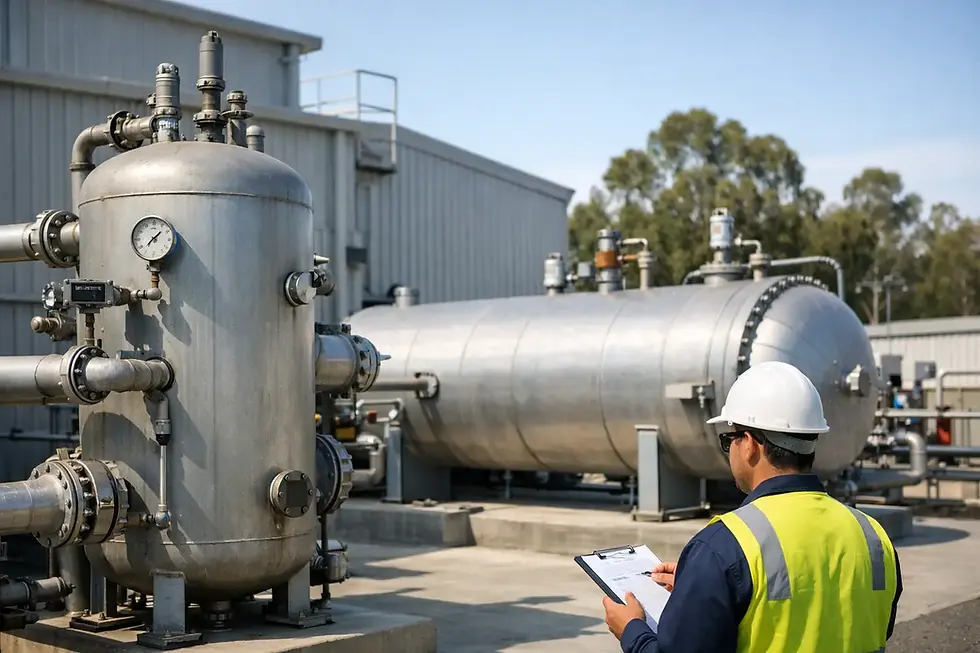
The inspection stage starts with a review of the boiler in its operating context where possible. External examination may identify steam, water or flue-gas leakage, corrosion under insulation, deformation, damaged lagging, unsupported piping, vibration concerns and issues with access or housekeeping.
Once the boiler is safely isolated and prepared, the inspector assesses accessible internal and external surfaces. The examination looks for degradation mechanisms relevant to the equipment. These can include general corrosion, localised pitting, erosion, caustic attack, fatigue cracking, tube thinning, overheating, weld defects and distortion.
Visual examination remains fundamental, but it is not always sufficient. Where condition, history or access limitations warrant it, non-destructive examination may be required. Ultrasonic thickness measurement can help establish remaining wall thickness. Other methods may be appropriate where cracking, weld condition or localised damage is suspected. The selected technique must suit the material, geometry and suspected mechanism.
Protective and limiting devices require careful attention because they are part of the boiler's safety case. The inspector reviews the condition, installation and available test evidence for safety valves, pressure indicators, water-level devices and associated controls. Functional testing and maintenance of these devices may sit with the owner or competent service provider, but incomplete test records can prevent the inspector from reaching a fully supported certification decision.
If repairs have been completed since the previous inspection, their documentation should be reviewed. Pressure-retaining repairs may require defined repair procedures, qualified welding, examination, pressure testing and records that demonstrate the work was suitable. An undocumented repair is not merely an administrative gap. It can leave the current condition and design adequacy of a critical area unknown.
Defect assessment and engineering decisions
Not every finding requires immediate removal from service. Equally, not every defect can be managed until the next planned shutdown. The central task is to assess the defect in relation to the boiler's design, remaining thickness, location, operating conditions and credible rate of deterioration.
A minor surface indication in a non-critical location may call for cleaning, monitoring and a shortened reinspection interval. Significant wall loss, cracking, active leakage, distortion or evidence of overheating can require repair, engineering assessment or withdrawal from service. The correct decision depends on evidence, not on production pressure or a preferred maintenance window.
Where the defect falls outside straightforward in-service assessment, an engineering review may be necessary. This can involve determining minimum required thickness, assessing fitness for service, reviewing design calculations or specifying repair and examination requirements. In some cases, further access or testing is needed before the equipment's status can be resolved.
Independent advice is particularly valuable at this stage. An inspector with no financial interest in selling a repair can define the condition, explain the risk and identify the information needed for a sound decision. Pressure Vessel Inspections Pty Ltd applies this independent approach through AICIP-accredited in-service inspection capability, supported by ISO 9001:2015 quality systems and relevant ASME and National Board experience.
Certification, records and close-out
The certification outcome should be clear, traceable and aligned with the inspection findings. A complete report normally identifies the boiler, describes the scope and methods used, records observations and measurements, states any limitations, identifies defects, and sets out required actions or future inspection recommendations.
A certificate should not be treated as a substitute for the report. The report provides the technical basis for the certification decision and becomes part of the asset's life-cycle record. It should be retained with previous reports, repair documentation, safety-valve records and maintenance history so that future inspectors can identify trends rather than assess each outage in isolation.
Where actions are required before continued service, the owner should close them out formally. This may include repair completion records, photographs, non-destructive examination results, pressure test documentation or confirmation that a protective device has been serviced and tested. The inspector may need to review this evidence or reinspect the equipment before issuing final certification.
Keep the boiler certifiable between inspections
The strongest certification outcome is supported by daily operating discipline. Water treatment should be monitored and recorded, leaks investigated early, protective devices maintained, and operating excursions documented. Boiler operators and maintenance teams are often the first to see changed conditions, such as unusual cycling, water-level instability, discoloured blowdown or persistent wet insulation.
Asset owners should also review the inspection plan whenever duty changes. Increased operating pressure, altered fuel arrangements, a different water source, extended shifts or a change in process demand can alter the degradation risk and may affect the inspection basis. A boiler's history is most useful when it is actively used to guide the next decision.
A well-managed boiler certification process gives plant teams a practical line of sight between equipment condition and operational risk. The value is not the document alone. It is the informed decision to operate, repair, monitor or remove equipment from service before uncertainty becomes an incident.
Comments