

Pressure Equipment Inspection and Compliance
- PVI
- Aug 21
- 5 min read
A pressure boundary can deteriorate without an obvious change in day-to-day production. Corrosion beneath insulation, fatigue at a nozzle connection, local thinning, damaged safety accessories and unsuitable repairs may remain hidden until operating conditions expose the defect. For owners and operators, pressure equipment must therefore be managed as a safety-critical asset throughout its service life, not only when a problem becomes visible.
Boilers, pressure vessels, piping and associated safety devices store significant energy. A loss of containment can cause serious injury, plant damage, environmental harm and extended production interruption. Effective control requires more than a calendar reminder or a historical certificate. It requires competent assessment of equipment condition, operating duty, inspection history and the applicable regulatory framework.
What Is Included in Pressure Equipment?
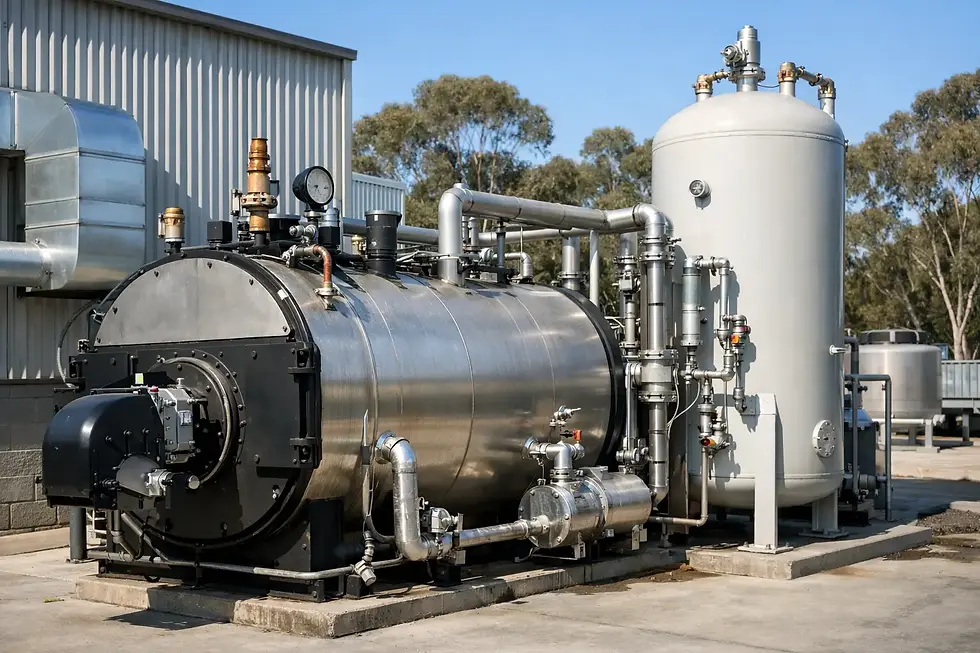
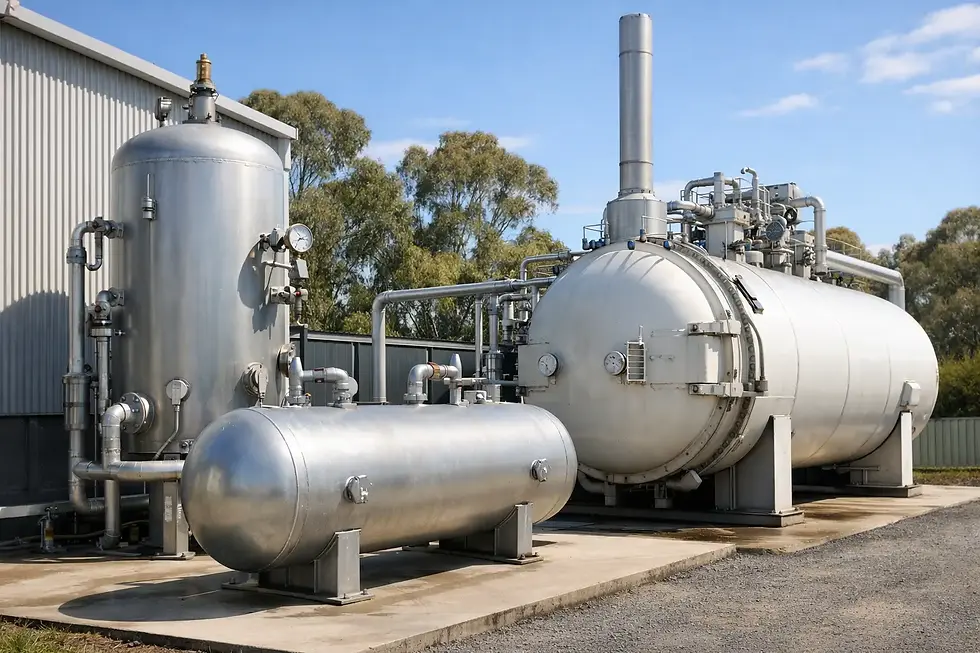
Pressure equipment covers a broad group of pressurised assets. In industrial and commercial facilities, this commonly includes steam boilers, air receivers, autoclaves, heat exchangers, pressure vessels, reactors, refrigerant receivers, compressed air systems and associated pipework. Safety valves, pressure-relieving devices, pressure gauges, controls and protective devices are also integral to safe operation.
The risk profile varies substantially between assets. A small air receiver in a workshop is not assessed in the same way as a steam boiler supplying a food-processing line, or a high-pressure vessel operating with corrosive process media. Design pressure and temperature matter, but so do fluid properties, cyclic service, process contamination, external corrosion exposure, previous repairs, changes in duty and the consequences of failure.
This is why a generic inspection approach is rarely sufficient. Inspection intervals and examination methods need to reflect the equipment’s actual service conditions and known degradation mechanisms.
Pressure Equipment Inspection Under AS 3788
AS 3788 provides the principal Australian framework for in-service inspection of pressure equipment. It addresses the inspection, assessment and documentation activities required to help establish whether equipment remains suitable for continued operation. For asset owners, the practical value of the standard lies in its structured approach to identifying condition, managing risk and retaining defensible records.
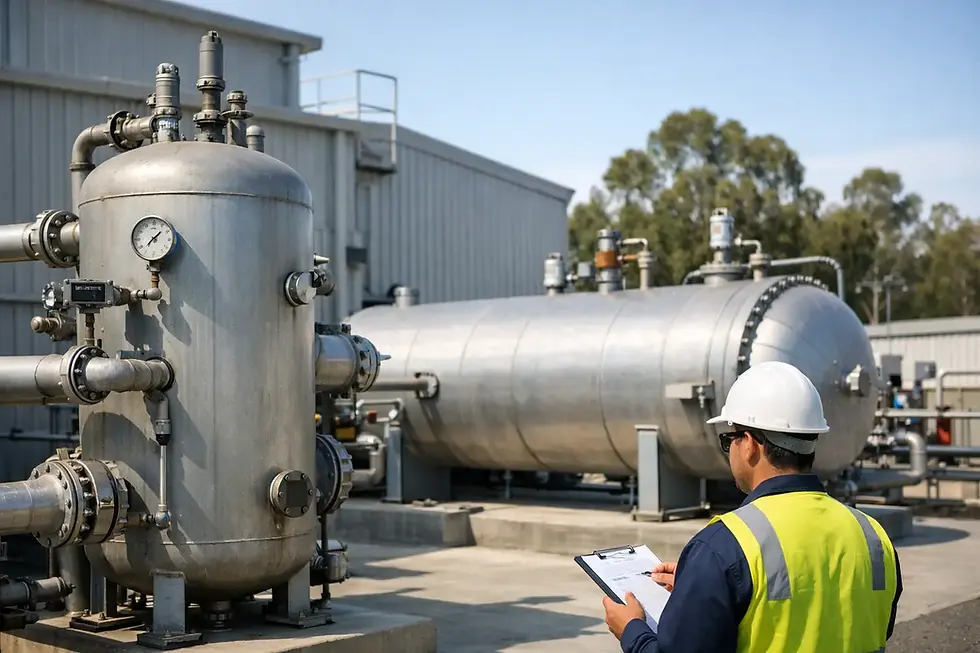
An in-service inspection may include a review of design and service records, external examination, internal examination where access permits, assessment of safety devices, consideration of non-destructive testing results and an evaluation of any defects found. The scope is determined by the equipment type, inspection history, service environment and the findings of the inspection itself.
A certificate is an outcome of a satisfactory inspection process, not a substitute for it. Where records are incomplete, previous inspection quality is uncertain or operating conditions have changed, the inspector may need to recommend additional investigation before forming an opinion on continued service. This can be inconvenient when production schedules are tight, but it is preferable to accepting unverified risk.
Inspection intervals are not simply administrative dates
Scheduled inspections are necessary, but an interval is only meaningful when the underlying equipment condition supports it. For example, a vessel with stable service conditions and a well-documented inspection history may be managed differently from one exposed to wet, corrosive or highly cyclic duty.
Condition-based information can refine the inspection strategy. Ultrasonic thickness measurements, examination of corrosion-prone areas, review of operating trends and confirmation of relief-device performance can help identify deterioration before it becomes critical. The appropriate approach depends on the asset and service, and should be justified in the inspection record.
Internal access is valuable, but not always available
Internal inspection can reveal conditions that an external examination cannot, including lining damage, internal corrosion, cracking, deposits and localised attack. However, opening equipment may require shutdown, isolation, cleaning, confined-space controls and production planning.
Where internal access is not practicable, alternative examination methods may provide useful evidence. They do not automatically deliver the same level of assurance. A competent inspector must consider the limitations of each method and determine whether the available evidence is adequate for the intended service period.
Common Conditions That Require Engineering Attention
Some findings can be managed through monitoring and a defined follow-up plan. Others require repair, alteration, derating or removal from service. The distinction should be based on engineering assessment rather than informal judgement on the plant floor.
Corrosion and erosion are frequent concerns, particularly at low points, moisture traps, under insulation, around nozzles and in areas of changing flow. Localised pitting can be more significant than general wall loss because it may reduce pressure integrity in a concentrated area. Thickness readings need to be interpreted against the vessel geometry, design basis and expected future degradation rate.
Fatigue is another issue that is easily underestimated. Repeated heat-up and cool-down cycles, pressure fluctuations, vibration and poor support arrangements can initiate cracking over time. This is particularly relevant where equipment has been operated outside its original design duty or has been subjected to frequent starts, stops or process upsets.
Repairs and modifications warrant careful control. Welding on pressure-retaining components, replacement of nozzles, changes to safety devices and alterations to controls may affect the equipment’s compliance status and safe operating limits. Work should be properly documented, assessed by competent personnel and inspected to the applicable requirements. A repair that restores production quickly but leaves unclear records can create a much larger compliance problem at the next inspection.
Records Are Part of the Safety Case
For pressure equipment, records are not secondary paperwork. They establish what the asset is, how it has been operated, what condition it was in at each inspection and why it was considered suitable for service. When management responsibility changes, a facility is acquired or an incident is investigated, these records become particularly important.
A useful equipment file should bring together design and registration information where applicable, fabrication details, operating limits, inspection reports, certificates, thickness data, repair documentation, safety-device test records and records of any engineering assessments. It should also identify changes in service, such as a new product, higher operating temperature, different cleaning regime or altered cycle frequency.
Incomplete history does not necessarily mean equipment must be immediately replaced. It does mean the uncertainty must be addressed. An independent inspection and engineering review can establish what evidence exists, identify gaps and define the work needed to support a decision on continued operation.
Selecting an Independent Inspector
The inspector’s competence and independence are central to the credibility of the inspection outcome. Asset owners should confirm that the person undertaking in-service inspection meets the prescribed AS 3788 requirements and holds appropriate AICIP accreditation. For equipment with international manufacture, repair or design considerations, ASME and National Board experience may also be relevant.
Independence matters because inspection advice may affect production, maintenance expenditure and equipment availability. An inspector who is not tied to a manufacturer, repairer or asset-owner interest can provide objective advice on the condition of the equipment and the actions required. That advice may support continued operation where evidence justifies it, or recommend restrictions where it does not.
Pressure Vessel Inspections Pty Ltd provides this independent inspection perspective through AICIP-accredited inspectors, supported by more than 30 years of relevant in-service inspection experience and an ISO 9001:2015 quality system. The purpose is not to prescribe unnecessary work, but to provide technically defensible advice in the client’s safety and operational interests.
Turning Inspection Findings Into Practical Action
The greatest value of an inspection is realised after the report is issued. Findings should be translated into clear responsibilities, due dates and operational controls. A recommendation to monitor wall thickness, for example, needs a defined location, method, acceptance basis and review date. A recommendation to repair a defect needs an agreed scope, competent execution and post-repair verification.
Maintenance and production teams should also understand the operating restrictions that protect the equipment between inspections. These may include pressure or temperature limits, water chemistry controls, drainage routines, start-up procedures or restrictions on process changes. If operating duty changes materially, the inspection plan should be reviewed rather than waiting for the next scheduled date.
Safe pressure equipment management is built on evidence, not assumption. A current inspection, complete records and independent technical judgement give plant owners a sound basis for keeping essential equipment in service while protecting people, production and compliance obligations.
Comments